Movie buffs and Olympic fans are getting treated to several new five-ringed films this year, and next to hit the big screen is the Jesse Owens biopic "Race."

Ambassador Andrew Young, Chris Bridges (a.k.a. Ludacris), Regina Belle, Anthony David and Kim Fields were among the honored guests on site.
 Rising track star and Rio Olympic hopeful Candace Hill also attended to enjoy what she called her first real red carpet experience. I was hoping to spot other Georgia Olympians, or the team from the upcoming documentary "Olympic Pride, American Prejudice" (a work in progress also featuring Owens) during the festivities.
Addressing the audience before the special screening, the actor in the title role, Stephan James, explained how he drew inspiration from the Olympic champion.
"Jesse Owens was a humanitarian," said James. "Of all things I learned about him, nothing [compared] to that aspect of his life."
James described Owens' courage to travel to Berlin as one of the first black Team USA Olympians also running against strong headwinds of Nazism in Germany and racism at home in the USA.
 "I took it as a responsibility to bring a level of humanity to him and bring that to the screen," said James. "I hope [audiences] enjoy the film and they learn something from it, but most importantly I hope [they're] inspired the same way I was."
Through a red carpet interview informed by an Atlanta Journal-Constitution report, I asked James about his training for the film on the tracks at Georgia Tech during his time away from filming "Selma" (in which he portrayed a young Congressman John Lewis).
While responding, James also described how his study of "Olympia" -- the original Olympic film and award winning documentary by Leni Riefenstahl -- factored into his Owens performance. James seemed humbled by the opportunity to portray the gold medalist, and the actor's responses may be viewed here:
I liked "Race" not only for its attention to small Olympic details but also its script directly addressing race relations, leaving no doubt about the title's double entendre while subtly proving the premise of the "Avenue Q" song "Everyone's A Little Bit Racist Sometimes." Just about all of key characters in "Race" had strong though inappropriate words about their fellow man.
Prepare to wriggle in your seat if you're uncomfortable with epithets like coon, cracker, darkie, eight ball, Kraut, the n-word or peckerwood. They're all in there, though not in succession as in the dugout confrontation of "42."
Some of the most honest conversations in "Race" are between Owens and his coach Larry Snyder (Jason Sudeikis). As the arc of their relationship evolves from coach:athlete to mentor:mentee then close friendship, their "tell it like it is" comfort levels increase, eventually shining as they defend each other to narrow-minded peers. This crescendos with the film's most direct statement on race (for a spoiler, see 1:35 to 1:45 of the trailer).
I think both characters grew from their open and direct conversations, and perhaps moviegoers may also. And, by the way, the second nod to a previous sports film comes through a few Sudeikis coaching scenes akin to Ian Holm in "Chariots of Fire."
If a goal of "Race" is to get audiences talking frankly about the topic race, the filmmakers succeeded -- the diverse premiere audience definitely shared conversations upon exiting the theatre. This writer sort of anticipated mention of Richard Pryor's response to Chevy Chase on "SNL" to creep into the post-screening banter.
I spoke with Ambassador Young, Fields and Belle about their observations.
 Young described "Race" as "probably his favorite" Olympic movie because it took him back to his first lessons in race relations at age four. Conversing with me as the credits rolled, Young said his boyhood home street included some pre-WWII German neighbors who publicly saluted Hitler, and early newsreels of Jesse Owens' victory provided fodder for some father-son conversations.
"It taught me 'don't get mad, get smart!" said Young, who added that he never met Owens or his family members, but he did serve in Congress with Owens' teammate/Olympic gold medalist Ralph Metcalfe.
Fields, who was emcee for a brief in-theatre presentation for James, said she enjoyed the film. The "Facts of Life" star who now resides in Atlanta thought it would be an inspiration for many, as did Belle, who answered a few questions on camera, specifically citing one of the film's best lines about freedom and sport relevant to anyone's chosen passion.
Returning to attention to detail in "Race," a few other finer points are notable.
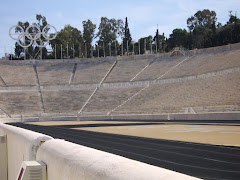
For the second or third time in recent film history (following "Unbroken" and "Berlin 36"), the German Olympiastadion is vividly brought to life through rich, modern animation.
An over-the-shoulder lens follows Owens through the vomitory and onto the field with 100,000 seated fans. This long take seamlessly presents an on-screen Owens transformation from national track star to international icon. This I liked, and many in the audience gasped at the stadium views inclusive of the 1936 Olympic cauldron.
I also enjoyed how everything from Riefenstahl's camera angles and lipstick to the long jump judges' correct Olympic pin and ribbon colors really popped. Earlier, during the opening scenes, there's an homage to "Rocky" with Owens taking a training run through depression era Cleveland. Everyone's got the right pinstripe suit, hat and rumble seat sedan, proving the costume and set decoration teams did their homework.
 They even put an Olympic oak seedling in Jesse's hands during his medal ceremony, accurately depicting the special takeaway gift presented to each winner of gold, silver and bronze (the fate of many Olympic oaks was documented by an International Association of Olympic Historians member, with at least one Owens oak still possibly alive at his his high school or college alma mater, Ohio State University).
The hand-held seedlings got a lot of surprised responses from the audience: "A tree?!?" and "What's Jesse going to do with a tree?"
Where I took issue with "Race" is through the broad and purely fictional liberties taken by the writers to showcase the politicking of Team USA and Third Reich. If the filmmakers went out of their way to get the right lapel pins on the actors, why create such preposterous scenes on other Olympic fronts?
The most outlandish set up features multiple conversations during which Riefenstahl, the documentary filmmaker, personally translates conversations between Joseph Goebbels and Avery Brundage, the German propaganda minister and the U.S. Olympic Committee delegate, respectively. Ridiculous!
These scenes seemed false on a level akin to another purely fictional Olympic film character, the so-called "Olympic shooter from Syria" written into "American Sniper" for distracting-to-this-blogger dramatic effect (more on that fiction here). More forgivable but perhaps just as fictional are post-race scenes during which Hitler snubbed Owens (facts still debated my many historians).
Two casting choices -- specifically regarding Jeremy Irons and William Hurt -- struck me funny as well.
 While Irons' CV is chock-full of douche bag villain roles (his love to hate them characters in "Lolita," "Reversal of Fortune," "Damage" and "Margin Call" among my favorites), and I get it that Irons as Brundage is a new addition to the list, it seemed to me the balding William Hurt, who also played some jerks (see "Broadcast News," "Mr. Brooks" and "A History of Violence") had a better hair line match to Brundage.
Instead, Irons dons the spectacles and Hurt carries his tail between his legs as Jeremiah Mahoney, the U.S. athletics official who -- at least in the script for "Race" -- failed to sway votes for a 1936 Olympic boycott (more creative writing liberties, I suspect -- though the boycott vote did take place it's doubtful such speeches were uttered by those in attendance).
 Two German performers shine as Riefenstahl and Goebbels, who share some verbal fencing just as directy as Owens and Snyder.
Barnaby Metschurat filled his S.S. costume with stern angst, and Carise van Houten dished out some clever schadenfreude for Hitler's closest minion.
"This is my Olympics," said Goebbels, to which Riefenstahl aptly retorted, "This is my film; without it, your Olympics will be forgotten in one year!"
Other brief notes: Though the exact duration of the film is not yet published, audiences may wish to pace themselves for a marathon not a sprint to the finish.
Also, the soundtrack to "Race" leaves a bit to be desired -- seemed like a missed opportunity for the filmmakers to engage Vangelis, John Williams or one of several talented African American composers for a stronger score (the team at Back Lot Music just didn't come through on this one).
I was very impressed by Stefan James filling some big Olympian shoes** in "Race." This was his second five-ringed film (he previously appeared in the made for television movie "The Gabby Douglas Story") and it hopefully will be the first of many major roles for James' career.
One key scene in the rain, during which Owens stares with optimism at the woman he hopes to marry, resembled the Pulitzer Prize winning photo of President Obama gazing into a challenging future, and down the road I think James could fill the shoes of our commander-in-chief on film.
Might also be fun to see James again in the eventual "Carl Lewis Story" or "Bolt -- Usain's Journey" down the road. Until then, my suggestion is to run, don't walk, to see "Race."
Premiere event photos and videos by Nicholas Wolaver. Hurt-Brundage-Irons images via IMDB. Stills and posters from "Race" via Focus Features.
**A pair of Jesse Owens' shoes may be on view in the upcoming High Museum of Art exhibition "Out of the Box: The Rise of Sneaker Culture" opening June 11; the exhibition catalog features images of a pair of Owens' spikes. "Race" includes a curious reference to these shoes via Coach Snyder clumsily trying to locate Adidas founder one night in Berlin -- another fictionalized, albeit interesting, Olympic trivia element in the film.

I think both characters grew from their open and direct conversations, and perhaps moviegoers may also. And, by the way, the second nod to a previous sports film comes through a few Sudeikis coaching scenes akin to Ian Holm in "Chariots of Fire."
If a goal of "Race" is to get audiences talking frankly about the topic race, the filmmakers succeeded -- the diverse premiere audience definitely shared conversations upon exiting the theatre. This writer sort of anticipated mention of Richard Pryor's response to Chevy Chase on "SNL" to creep into the post-screening banter.
I spoke with Ambassador Young, Fields and Belle about their observations.

"It taught me 'don't get mad, get smart!" said Young, who added that he never met Owens or his family members, but he did serve in Congress with Owens' teammate/Olympic gold medalist Ralph Metcalfe.
Fields, who was emcee for a brief in-theatre presentation for James, said she enjoyed the film. The "Facts of Life" star who now resides in Atlanta thought it would be an inspiration for many, as did Belle, who answered a few questions on camera, specifically citing one of the film's best lines about freedom and sport relevant to anyone's chosen passion.
Returning to attention to detail in "Race," a few other finer points are notable.
For the second or third time in recent film history (following "Unbroken" and "Berlin 36"), the German Olympiastadion is vividly brought to life through rich, modern animation.
An over-the-shoulder lens follows Owens through the vomitory and onto the field with 100,000 seated fans. This long take seamlessly presents an on-screen Owens transformation from national track star to international icon. This I liked, and many in the audience gasped at the stadium views inclusive of the 1936 Olympic cauldron.
I also enjoyed how everything from Riefenstahl's camera angles and lipstick to the long jump judges' correct Olympic pin and ribbon colors really popped. Earlier, during the opening scenes, there's an homage to "Rocky" with Owens taking a training run through depression era Cleveland. Everyone's got the right pinstripe suit, hat and rumble seat sedan, proving the costume and set decoration teams did their homework.

The hand-held seedlings got a lot of surprised responses from the audience: "A tree?!?" and "What's Jesse going to do with a tree?"
Where I took issue with "Race" is through the broad and purely fictional liberties taken by the writers to showcase the politicking of Team USA and Third Reich. If the filmmakers went out of their way to get the right lapel pins on the actors, why create such preposterous scenes on other Olympic fronts?
The most outlandish set up features multiple conversations during which Riefenstahl, the documentary filmmaker, personally translates conversations between Joseph Goebbels and Avery Brundage, the German propaganda minister and the U.S. Olympic Committee delegate, respectively. Ridiculous!
These scenes seemed false on a level akin to another purely fictional Olympic film character, the so-called "Olympic shooter from Syria" written into "American Sniper" for distracting-to-this-blogger dramatic effect (more on that fiction here). More forgivable but perhaps just as fictional are post-race scenes during which Hitler snubbed Owens (facts still debated my many historians).
Two casting choices -- specifically regarding Jeremy Irons and William Hurt -- struck me funny as well.
 While Irons' CV is chock-full of douche bag villain roles (his love to hate them characters in "Lolita," "Reversal of Fortune," "Damage" and "Margin Call" among my favorites), and I get it that Irons as Brundage is a new addition to the list, it seemed to me the balding William Hurt, who also played some jerks (see "Broadcast News," "Mr. Brooks" and "A History of Violence") had a better hair line match to Brundage.
Instead, Irons dons the spectacles and Hurt carries his tail between his legs as Jeremiah Mahoney, the U.S. athletics official who -- at least in the script for "Race" -- failed to sway votes for a 1936 Olympic boycott (more creative writing liberties, I suspect -- though the boycott vote did take place it's doubtful such speeches were uttered by those in attendance).
 Two German performers shine as Riefenstahl and Goebbels, who share some verbal fencing just as directy as Owens and Snyder.
Barnaby Metschurat filled his S.S. costume with stern angst, and Carise van Houten dished out some clever schadenfreude for Hitler's closest minion.
"This is my Olympics," said Goebbels, to which Riefenstahl aptly retorted, "This is my film; without it, your Olympics will be forgotten in one year!"
Other brief notes: Though the exact duration of the film is not yet published, audiences may wish to pace themselves for a marathon not a sprint to the finish.
Also, the soundtrack to "Race" leaves a bit to be desired -- seemed like a missed opportunity for the filmmakers to engage Vangelis, John Williams or one of several talented African American composers for a stronger score (the team at Back Lot Music just didn't come through on this one).
I was very impressed by Stefan James filling some big Olympian shoes** in "Race." This was his second five-ringed film (he previously appeared in the made for television movie "The Gabby Douglas Story") and it hopefully will be the first of many major roles for James' career.
One key scene in the rain, during which Owens stares with optimism at the woman he hopes to marry, resembled the Pulitzer Prize winning photo of President Obama gazing into a challenging future, and down the road I think James could fill the shoes of our commander-in-chief on film.
Might also be fun to see James again in the eventual "Carl Lewis Story" or "Bolt -- Usain's Journey" down the road. Until then, my suggestion is to run, don't walk, to see "Race."
Premiere event photos and videos by Nicholas Wolaver. Hurt-Brundage-Irons images via IMDB. Stills and posters from "Race" via Focus Features.
**A pair of Jesse Owens' shoes may be on view in the upcoming High Museum of Art exhibition "Out of the Box: The Rise of Sneaker Culture" opening June 11; the exhibition catalog features images of a pair of Owens' spikes. "Race" includes a curious reference to these shoes via Coach Snyder clumsily trying to locate Adidas founder one night in Berlin -- another fictionalized, albeit interesting, Olympic trivia element in the film.


 Posts
Posts