Showing posts with label Atlanta Olympics. Show all posts

Saturday, November 21, 2020

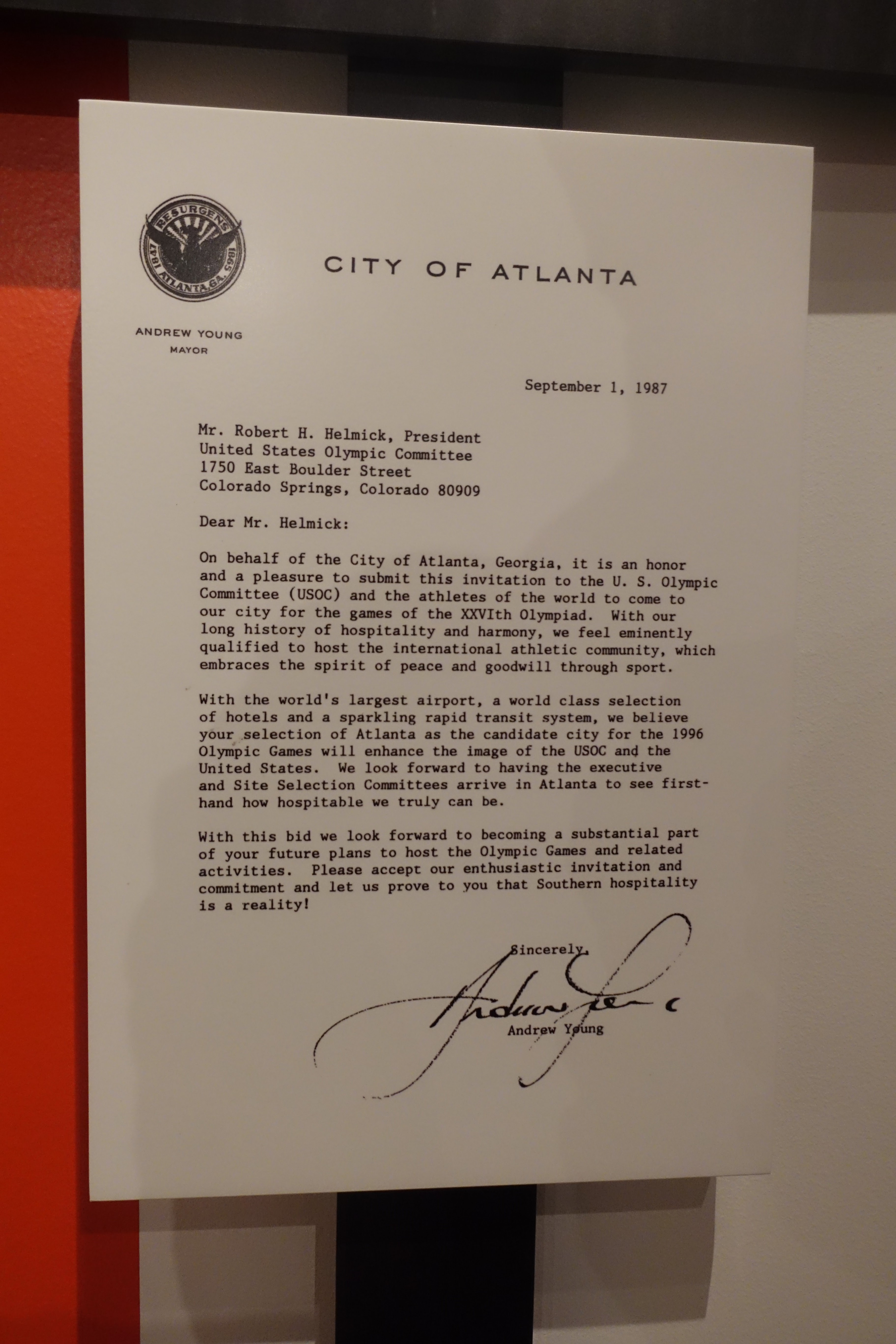
Atlanta History Center Opens Signature Exhibition Framing Atlanta's '96 Olympic Journey and Legacy


On Sept. 18, the 30th anniversary of Atlanta winning its bid to host the Centennial Olympic Games, the Atlanta History Center welcomed visitors to the museum's newest signature exhibition "Atlanta '96: Shaping An Olympic & Paralympic City." 

Atlanta History Center
An update in the making for multiple years since the previous Olympic section closed to accommodate the center's excellent Cyclorama installation,    I enjoyed a five-ringed sneak peek on Sept. 15. 

After additional visits on both    opening day and Sept. 19, and more than two months of percolating on observations, the new space remains at once pleasing and perplexing for this blogger. Here's a video the museum posted to describe the experience. 


What follows is a blend of the good stuff (the exhibition is definitely worth a special visit) and items I think would help improve on a solid presentation. 

New surprises and what I liked:

- Clean and classy lines of the timeline displays with the Modern Games' and Atlanta's history on parallel tracks from 1896 to 1996 and beyond

- Views of the original mock-up for Atlanta's hardbound bid publication, reminiscent of Miranda Priestley's dummy magazine copy known as "The Book" in "The Devil Wears Prada"

- First look at a rare, custom-designed Cabbage Patch Doll with pin stripe suit and leather briefcase presented to voting members of the International Olympic Committee

- The impressive hand-painted original model for architect Siah Armajiani's Olympic Bridge and Cauldron, a functional sculpture that did not reach the potential of its sister structure in Minneapolis

- Original artwork -- a massive, colorful canvas -- painted by the athletes of the XXVIth Olympiad in the athlete village at Georgia Tech

- Discovering one extremely rare "Olympic Quilter" pin given to the artisans who stitched up content for the Cultural Olympiad. An equally rare prototype or unreleased pin featuring mascot Izzy carrying a Georgia state flag (circa 1996) also took me by surprise

- First look at the set of custom miner's lamps used to transport the Olympic flame from Greece and to many points across the U.S. during the epic 1996 Olympic Torch Relay

- One of the authentic "Info '96" interactive kiosks touting IBM technology and the first official website for a host city

- Displays about important community leaders and the regional causes they championed, providing context for the against-all-odds proposal the Atlanta bid team brought to the city during the later 1980s

- Touchless interactive video players that "talk to the hand" of visitors who wave or make fists to select and play archived content (perhaps the state's first museum to use this technology)

Atlanta History Center
- New and more detailed information about the Shepherd Center and its role, along with the Atlanta Paralympic Organizing Committee (APOC) to secure the Paralympics' parallel journey with each Olympiad since

- All of the feels from viewing footage of Olympic champions' "one moment in time"

- An oversized photo of my longtime friend and mentor cheering at Underground Atlanta moments after IOC President Juan Antonio Samaranch announced the Games are awarded to the city of ... At-lan-ta!


What I miss (or hope they'll bring back over time):

- Video of the aforementioned announcement by J.A. Samaranch, a glaring omission given the local-to-global impact of that moment in the arc of Olympic and the city's history (others alive in 1990 still get goosebumps and sentimental tears watching that Tokyo moment -- am I right?). This, for me, was the biggest "duh!" oversight that could have easily appeared as it did in the previous Olympic section. Why leave out one of the city's proudest, most historic and gleeful moments captured on global news broadcast by hometown network CNN? My only guess is this has to do with exhibition planning by folks who themselves were not eyewitness to Atlanta's global debut that even included the Atlanta History Center in the official bid video

- More of the 1988 to 1990 Atlanta bid mementos (specifically the rarest of the "Circle of A's" bid pins in the form of a gold, silver or pewter women's brooch). A lot of space was used to create a map of bid cities, but the pins incorporated are 'meh' while their collection likely has other hidden gems in storage

- Any one of the Olympic Orders presented to Atlanta organizers (these are the rarest of Olympic honors, and Billy Payne's is apparently on loan, but what about Ambassador Andrew Young's?). Even the Yeltsin Presidential Center in Yekaterinburg, Russia, displays their hometown hero Boris' Olympic Order! (In that nation's language the translation of "duh" is "да" or "yes!")

- The complete (or nearly complete) collection of summer Olympic torches, another rare bragging opportunity in storage (to the Atlanta History Center's credit, they do display several summer Games torches). I learned they may not have one of the rarest summer torches, but even a "complete collection minus one" or "complete collection*" with a asterisk would be marvelous. This link includes a photo of the previous museum torch display that's now history

- The museum's signed version of "Summon The Heroes" sheet music autographed by Oscar and Grammy-winning composer John Williams (back in storage?)

- Touchless database of 1996 Olympians (or at least the medal winners). Bonus option would be a database of all the volunteers listed in the margins of every page of the Games' "Official Report"

- The model of the Atlanta Olympic Village that was on view for years (including many months of pre-installation of the new signature exhibition). This could easily fit inside the "glass fence" protecting the enormous athlete-painted canvas, complementing the Olympic Stadium model only steps away. By the way, athletes added to the painting in the "international zone" of the Village (the model portrays this zone).

Also missing are obvious photo opp or selfie-bait spots on which to stand atop the medals podium or hold a '96 torch. This could be easily remedied with a life-sized cutout of any torchbearer or moving a medals podium from storage to the ample corridor facing the exhibition. 

From my view, with only 2,600 square feet available, too much space is filled with anti-Games elements. I liked a look at the successful efforts of few in response to Cobb County government, but did it deserve as much square footage as a nearby Cultural Olympiad showcase? It is important to acknowledge this history, of course, but do visitors need floor-to-ceiling displays on the movements that rode the Games' coattails? (Answer: I don't think so.)

And while another rafters-to-carpet photo shows group prayers in the wake of the Centennial Olympic Park bombing, visitors almost need a magnifying glass to find mention of Richard Jewell, whose image does not appear anywhere in spite of saving countless lives (this feels like another missed opportunity to reshape incorrect history). But, hey, the protesters who got the Games out of Cobb County are heroes, too. Their photo does appear.  

The bottom line is the Atlanta History Center's new signature Olympic exhibition marches to its own drum where other Games museums stick more to a traditional sports museum format. 

With that stated, in spite of a few missed beats, five-ringed fans should check it out. For those who cannot get enough of Atlanta's Olympic history, you may enjoy a trio of thorough blog posts about the Atlanta Games by Sarah Dylla, who worked hard and delivered the points to ponder in this five-ringed exhibition. Dylla also shared more in a conversation aired on WABE-FM's "City Lights with Lois Reitzes." Visit AtlantaHistoryCenter.com or call 404-814-4000 for ticket and other visitor information. 

Photo credits: Atlanta History Center where noted. All other images by Nicholas Wolaver. 


Tuesday, October 30, 2018

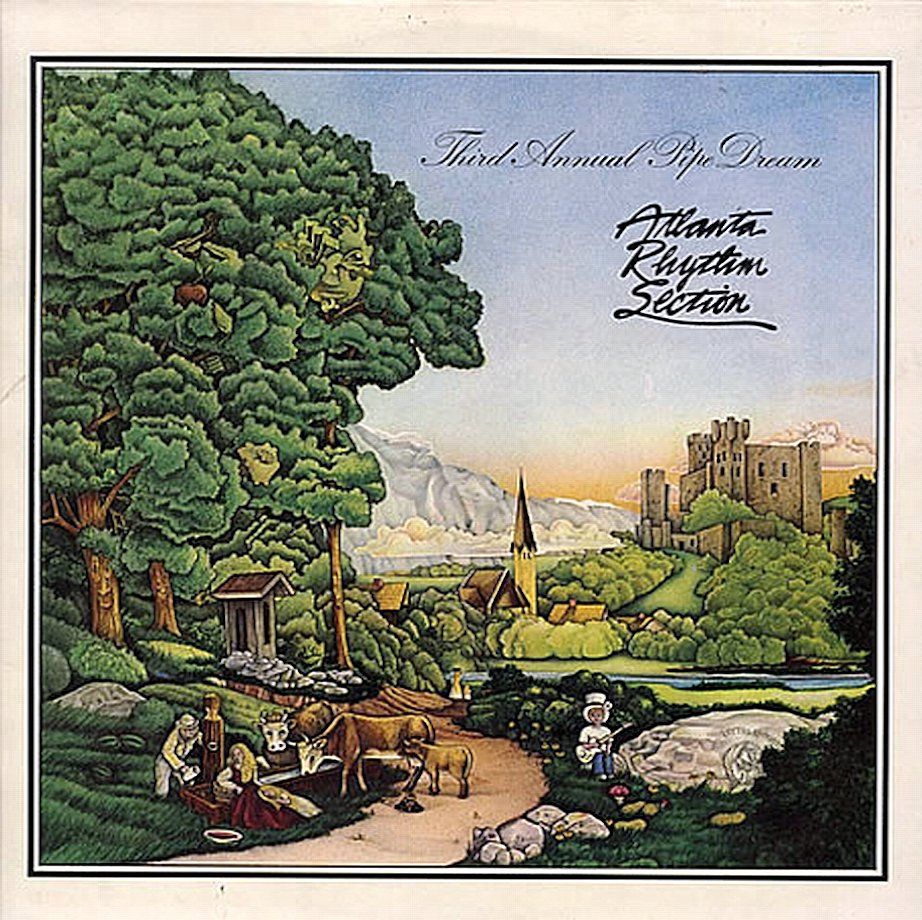
New Book Inspires 'Spooky' Memories of Southern Rock Band (and Client) Atlanta Rhythm Section

Just in time for Halloween, last week I found a "Spooky" treat sans trick via my email inbox.

The P.R. team for Schiffer Publishing reached out to offer a review copy of the new book "The Atlanta Rhythm Section: The Authorized History" by Willie Moseley.

Yes, please!

I don't think the publicist knew that in 1999 ARS was one of my first clients at The Headline Group. 

Along with "Spooky" (penned by the band's longtime manager and our main contact, Buddy Buie), during that springtime project I also came to appreciate ARS' Southern rock classics including "So Into You" and "Doraville" ("a touch of country in the city") as well as "Imaginary Lover" and "Champagne Jam."

Our motto while publicizing the band's CD titled "Eufaula" -- named for the historic town near the Alabama/Georgia state line -- was "Do It Or Die." 

We nearly did just that during a severe thunderstorm with too-close-for-comfort lightning that crept up during a live and lakeside Internet event with the band.

If only the online audience had known we were chatting with them from a state park men's room while hunkered down during the cloudburst (the band's front man Ronnie Hammond was a good sport about this and many other interviews we secured). 

I found "The Authorized History" of ARS to be a quick read and it will be a fun text for longtime fans. Much of the book features the band's slow but steady rise to prominence during the early 1970s, peaking with some spectacular concerts during which the band shared top billing with Heart, Genesis, Foreigner, Tom Petty and the Heartbreakers and Jefferson Starship.

Interesting to learn that ARS presented the first rock (or any) concert at Georgia Tech's Grant Field, a venue that most recently hosted The Rolling Stones in 2015. 

Pouring over Moseley's writing, I knew there'd be a five-ringed payoff, and sure enough there is, on page 204.

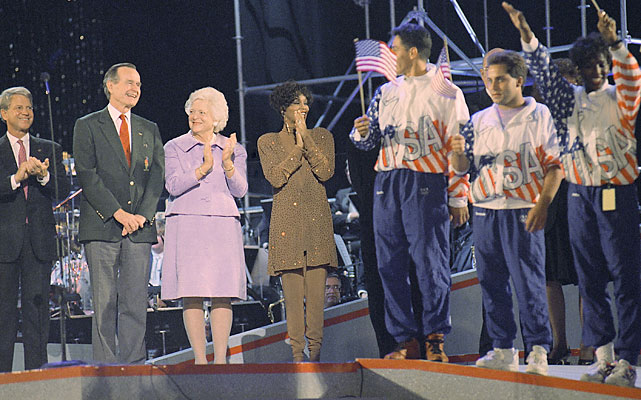
"Another memorable concert -- for the entire band -- happened [when] the Olympic Flag Jam, a grandiose event, was held at the Georgia Dome in Atlanta on September 17, 1992, to boost the upcoming 1996 Centennial Olympic Games that were scheduled for Atlanta.

The Olympic flag was officially transferred from Barcelona, Spain, the site of the previous Olympiad. Overseen by Dick Clark and Whitney Houston, the event was attended by President George H.W. Bush and his wife."

The text goes on to describe the celebratory event as including Houston, Santana, Travis Tritt, Tricia Yearwood, Alabama, Garth Brooks, TLC and James Brown, and sports personalities including Richard Petty and Atlanta-based Olympian Edwin Moses, who autographed a set of bass strings belonging to an ARS member. 

"My most vivid memory of playing at 'flag jam' was looking in the audience and seeing Coretta Scott King dancing along to us playing 'Champagne Jam,'" said Steve Stone, ARS bass and backing vocalist, according to the Moseley text. 

The event marked ARS' second live performance for a sitting president, a follow up to their September 25, 1978, gig at The White House hosted by fellow a fellow Georgia native, President Jimmy Carter. Interesting to read about "the first rock band to play on the south lawn" at 1600 Pennsylvania Ave. and how the after party unfolded without much interference by Secret Service personnel.

It was gratifying to find mention of Buie's obituary in The New York Times which I personally pitched to the newspaper upon learning of Buddy's passing three years ago.

But, unfortunately, the book did not delve into much about the work our team from The Headline Group did in spring 1999, save mention of a spring picnic at which food from The Varsity was a treat and a noise complaint brought things to an early close (I was there!).

But I'm not gonna let it bother me tonight.

Photos via ARS, Schiffer Publishing and SI.com featuring AP photo by Scott Applewhite

Friday, July 8, 2016

High Museum Missteps With Rise of Sneaker Culture

In recent years, I've been to three presentations by Michael Shapiro, the High Museum of Art's executive director from 2000 through July 2015. For the sake of disclosure, the High was a public relations client in 2005 and again from 2012 to 2015.

At all three of Shapiro's speeches, he stated the 1996 Cultural Olympiad exhibition "Rings: Five Passions of World Art" -- which the High presented during Atlanta's Olympics -- marked a major milestone and critical turning point (for the better) for the Southeast's premier museum of art. 

Shapiro's and his peer's remarks echo in news reports and in general Atlanta arts conversations; it seems that most people agree that "Rings" put the High on the map of art museums with which to be reckoned. 

Given this summer's 20th anniversary for both Atlanta's Games and the High's main ascension point, I thought for certain a commemoration might take place in step with next week's party for all things Olympic in Atlanta. 

And when the museum announced "Out of the Box: The Rise of the Sneaker Culture" as this summer's main exhibition, an Olympic or "Rings" commemoration seemed even closer to "shoe-in" status.

Sadly, upon finally visiting the exhibition yesterday, the certainty unlaced.

And the museum's lack of promotion for the exhibition's many five-ringed connections seems like a big-time missed opportunity (insert grating, high-pitched squeaks of rubber smudging basketball courts here).

Before shoehorning the good parts of "The Rise of Sneaker Culture" below, it's worth mentioning the lack of Olympic promotion rests not entirely at the High's feet. 

The exhibition is on tour, arriving from its source curators of the Bata Shoe Museum in Toronto by way of the first U.S. presentation at The Brooklyn Museum in New York last fall, and a winter stop at Ohio's Toledo Museum of Art. 

Much of the exhibition's content -- such as a 256-page catalog or the wall text (in this exhibition, at the toe or heel of each shoe's display space in horizontal glass cases) -- was written by non-Atlantans with less knowledge of Georgia's capital or the High's Olympic legacies.

Though the catalog is beautiful and chock-full of interesting facts, figures, specially-written contributions and gorgeous photos, the Olympic notes are riddled with copy errors. 

Specifically, on page 79 the section author, Bata Shoe Museum Senior Curator Elizabeth Semmelhack, incorrectly referenced "Gold medalist Heinz Fütterer ran in Pumas at the 1954 Olympics" (Fütterer golds were earned at the world championships in 1954, a non-Olympic year, and he won a team relay bronze at Melbourne's 1956 Olympiad).

More surprising: Beside of color photo of Mexico City Olympians Tommie Smith and John Carlos barefoot on the medal stand beside their suede Pumas, the author incorrectly reports that "At the medal ceremony, both athletes too off their black Suedes"

Somewhere, Elvis is joining me in musically admonishing Semmelhack because the photo has "blue, blue, blue suede shoes, baby!"

In the High, there's no mention of Smith nor Carlos and their iconic Olympic moment. Rather, the Suede Puma sample appears beside an signed orange version with the autograph of Atlanta-born NBA star Walt "Clyde" Frazier. Unmentioned in the catalog and exhibition: In 2008, Smith reportedly gave one of his 1968 Pumas to Usain Bolt as a birthday gift. 

The catalog copy errors hop over to page 218 with a reference to "Mohammad Ali" (it's Muhammad, thank u) as the inspiration for a rare Adidas sneaker design. 

Skip back to page 54 for a reference to Jesse Owens as "the winningest Olympian" up to 1936 (Finland's Paavo Nurmi won nine gold medals from 1920 to 1928).

Jump to the same page photo cutline to find it erroneously states Owens was "the first athlete to receive four gold medals in the Olympic Games" (Nurmi earned five golds at Paris in 1924). Does the researcher for this section still have a job?


Fortunately, here's what the exhibition gets right:

-- Display of a 1936 shoe like those presented to Owens in Berlin by Adolf "Adi" Dassler, founder of Adidas and brother of Puma founder Rudolph Dassler; I noticed more visitors stopped to study this shoe in detail, and one person even remembered the shoe scene depicted in the recent Owens biopic "Race"

-- Showcase of the aforementioned 1968 Puma blue Suede style akin to what Team USA gave Smith and Carlos in Mexico City. This shoe really does look cool

-- Numerous Nike and Air Jordan brand shoes donned by Michael Jordan just after his 1984 Olympic debut and later when he played for the Dream Team in 1992

-- Michael Johnson's gold Nike track spikes tailored to his specifications (one is a half-size larger than the other), worn at Atlanta Olympic Stadium 20 years ago

-- Autographed Fila Grant Hill II shoe worn in play at the 1996 Olympics at the Georgia Dome

-- Numerous other designs celebrating and mentioning Olympic basketball players Patrick Ewing (1984, 1992), Shaquille O'Neal (1996), Danny Manning (1988) and LeBron James (2004, 2008, 2012). But when you're looking at James' comical and colorful Stewie Griffin LeBron IV sneakers by Nike, don't expect to find mention of the player's 2016 MVP status for the Cleveland Cavaliers. 

-- Gold Puma X Undefeated Clyde Gametime Gold sneakers honoring 2012 Olympic basketball at London.

-- In the non-Olympic realm, I enjoyed the Roy Lichtenstein-inspired design, original Onitsuka Tiger Tai Chi lace-ups like those worn by Bruce Lee and Uma Thurman, Damien Hirst's contributions for a pair of Converse X, and a pair of rubber "overshoes" from Brazil circa the 1830s.

-- There's not an exhibition-specific app, but the museum presents some interesting video content about select shoes via the site SneakerHigh.org. The Owens footage is interesting, as is the No. 1 video regarding the anniversary of Reebok Pump Fury celebrated a few years ago. 

I do think that with so many shoes tied directly to the 1996 Atlanta Games, the High could or should have laced up some promotions, an infographic for sports fans, or an invitation for Johnson to revisit his donated gold shoes. 

The Brazilian shoes from 1830 even provide a potential shoe box feature tied to the Rio 2016 Olympics -- imagine, safety from rubbers!

With several Atlanta-based gold medalists such as current Wheaties box athletics champion Edwin Moses, NBA player and Olympian Dwight Howard, or high jumper Chaunté Lowe nearby, why not engage them for their footnotes on Olympic shoes?

Most of the sneakers are presented in one large gallery, with a smaller side gallery showcasing the more historic (translation: older) designs spanning the mid-1800s to the 1960s. Each shoe rests in place, so it's not possible to peer at every angle unless a design happens to be placed at a glass case end cap. 

Suggestion for future shoe exhibitions: Place the objets d'art atop motorized Lazy Susans for a fresh spin of the moccasin.

The bottom line: For readers considering museum options, "Out of the Box: The Rise of Sneaker Culture" is worth visiting for its wealth of shoe artistry. Ruminating on its potential for Atlanta Olympic ties for more than a year, I could not help but be disappointed on that front, but the sneakers on view do fill in many interesting footnotes on history.

With that said, I haven't been this perplexed/disappointed by a High exhibition since they mounted a 2011 assemblage titled "The Art of Golf" whose curator obliviously left out the two most influential modern golf and sports artists, Leroy Neiman and Bart Forbes, perhaps another example (prior to Bata's catalog researcher and copy editor errors) when curators jumped for "sports meets arts" but only tossed a brick or air ball.

"The Rise of Sneaker Culture" remains on view at the High though Aug. 11 before it stumbles into the Speed Art Museum in Louisville, Ky. Maybe while in "The Greatest" Ali's hometown they'll get the spelling right for Muhammad. 

Images via High.org and Bata Shoe Museum; Olympic photo credit TBD.


Tuesday, July 5, 2016

Come Celebrate Atlanta's Olympic 20th Anniversary


On the eve of Rio's Olympic adventure, Atlanta will celebrate the 20th anniversary of its 1996 Games at an evening party in Centennial Olympic Park.

The downtown gathering is free and open to the public on July 16 starting at 6 p.m.

According to a press release from the Georgia World Congress Center Authority (GWCCA), the entity charged with managing the park, the "Relive The Dream" event will be "star-studded" and feature food trucks, live entertainment and fireworks.

"The festivities will celebrate the glories of the Games, reuniting the athletic heroes, the organizing team and fans at the greatest lasting [1996 Olympic] legacy -- 21-acre Centennial Olympic Park," according to the release.

The event is also an "Olympic volunteer reunion," and according to Atlanta-based members of the pin collecting group Olympin, there will be tables available for trading and sharing favorite pin or Games-time stories. A spokeswoman for GWCCA said their "might" be a "Relive The Dream" pin created for the event.

Anticipated star athletes for the party include 10-time Olympic medalist and Sports Illustrated "Olympian of the Century" track and field legend Carl Lewis, Olympic swimming gold medalists Janet Evans and Amy Van Dyken, Olympic basketball gold medalist Teresa Edwards, and a reunion of the gold-medal winning "Magnificent Seven" U.S. women's gymnastics team including Kerri Strug, Shannon Miller, Amy Chow, Dominique Dawes, Jaycie Phelps, Amanda Borden and Dominique Moceanu. 

Earlier on July 16, Evans -- a vice chair and director of athlete relations for the Los Angeles 2024 bid committee -- will host a private "Town Hall" meeting at which many more Atlanta-based Olympians are expected. In a conversation following the Muhammad Ali Memorial Service in Louisville last month, Evans told me the town hall format was a hit with participants in Miami and Chicago during spring 2016. Since the Ali event in June, a third town hall took place during the USA Swimming Olympic Trials in Omaha last week.

Dignitaries scheduled to appear at Centennial Olympic Park include Georgia Lt. Gov. Casey Cagle, Atlanta Mayor Kasim Reed and Ambassador Andrew Young, who with Billy Payne led the Atlanta Olympic bid and Atlanta Committee for the Olympic Games (ACOG). 

Payne first announced the July 16 party at last September's private "Dreamers & Believers" gathering of Atlanta Olympic bid team members. 

Scheduled entertainment includes country music artist Colby Dee, the folk and Americana duo Banks & Shane, and the gospel-influenced SEEiT Choir.

Since the 1996 Games, Centennial Olympic Park attracted $2.2 billion of new downtown development, including nine hotels, residential towers and attractions including the Georgia Aquarium, World of Coca-Cola and Center for Civil and Human Rights.

The park recently launched a new "adopt-a-brick" program inspired by the 1996 brick campaign that created the footprints and park space enjoyed by tens of millions of visitors during the last 20 years.

See you July 16!

Logo and park image via GWCCA; Payne photo by Nicholas Wolaver

Monday, May 16, 2016

Saying Goodbye to a Guinness World Record Client

Jane Little/ASO
On a weekend that started on a musical high -- attending a Jane's Addiction concert at the Shaky Knees Music Festival in Centennial Olympic Park -- Sunday brought sad news of the passing of a Guinness World Record candidate named Jane Little.

I enjoyed the pleasure of meeting Little through an ongoing client project for the Atlanta Symphony Orchestra. It was an honor and privilege to share her story with media.

Last summer the ASO asked me to help with some press release writing, and when news of Little reaching her 71st consecutive Atlanta season crossed my desk, the wheels got to turning -- could she set a Guinness World Record?

Inspired by attending a November 2014 Guinness World Record-setting event with another client, the International Association of Amusement Parks And Attractions (a record for "most participants launching a hand-held model glider" was set during IAAPA Attractions Expo 2014), with the ASO we submitted the necessary paperwork to establish Little's candidacy for "longest career in a symphony orchestra."

Though the application remains in review pending confirmation later this month, we've been spreading the good cheer of Little's remarkable achievement since February.

Little performed with the ASO from Feb. 4, 1945, to yesterday, May 15, 2016 -- about 71 years and two months. Unfortunately, she collapsed during Sunday's afternoon performance. Though emergency responders and a medically-trained chorus member briefly revived Little, she died later at Grady Memorial Hospital.

I met Jane on stage following her Feb. 4 performance. Her double bass is the orchestra's largest instrument, and it was remarkable to see Little playing and later carrying her the bass several inches taller than her 4'11" stature. I could hardly believe Little turned 87 only two days earlier!

Officially, Little was assistant principal bass emeritus in the Atlanta Symphony Orchestra. She started her musical career at ASO during WWII following two years of high school bass study. In the decades since, she played under all four of the ASO's directors: Henry Sopkin, Robert Shaw, Yoel Levi and Robert Spano, according to the press release my ASO contacts and I wrote earlier this year.

She also performed with guest conductors Igor Stravinsky, Aaron Copland, James Levine and many others.

Most impressive to me was Little's work with "Olympic Fanfare and Theme" composer/conductor John Williams -- both performed "Summon The Heroes" (Williams' 1996 Olympic composition) with the ASO during the Atlanta Olympic opening and closing ceremony. You can catch a glimpse of Williams and Little in the stadium via this video:


"Performing with John Williams is one of my favorite experiences with ASO," said Little when we met at her locker backstage.

She added the Olympic symphony practiced extensively and performed in both a dress rehearsal on July 18, 1996, and at the main event the following evening for a crowd of more than 80,000 at what is now Turner Field.

Little played using a rare bass built by Carlo Giuseppi Testore in 1705, one of the few elements of the ASO older than Jane. In 1953, she met and married fellow ASO musician Warren Little, a 6'4" flute player who carried her bass during 49 years until his death in 2002.

Signed Sheet Music on view
at Atlanta History Center
Also remarkable about Little was her perseverance over illness. In addition to battling a form of cancer, she returned to the ASO early this year after suffering a fall and cracked vertebrae in autumn 2015.

During the media interviews booked for Little locally and nationally, she was fond of stating her retirement plans included taking up bass guitar and starting a jazz group she named "The Grannies." A Washington Post reporter wrote and extensive story and later tribute, and The Violin Channel published a first person report Jane verbalized for me to type and submit on her behalf -- she was a great storyteller. She died doing something she loved dearly.

Listening to WABE's tribute and early 2016 interview made me smile as it is clear Jane was one lively woman!

I will miss listening to Little at future ASO performances, and certainly will cherish working with this Guinness World Record holder among my favorite public relations client projects. She was a positive inspiration for many, and she set a very high bar for future generations of musicians.

ASO performance photos by Nicholas Wolaver. Atlanta Olympic opening ceremony photos via Eileen Langsley. Photo below via Washington Post/Dustin Thomas Chambers


Photo via Dustin Thomas Chambers/Washington Post

Blog Archive

Powered By Blogger
Web Analytics