Showing posts with label Centennial Olympic Park. Show all posts

Sunday, February 16, 2020

Atlanta Hosts 2020 Olympic Marathon Trials 2/29

Several dozen American women and men will spend Leap Day 2020 running for the Games, with three competitors earning their tickets to Tokyo as Atlanta hosts the U.S. Olympic Team Trials for marathon.

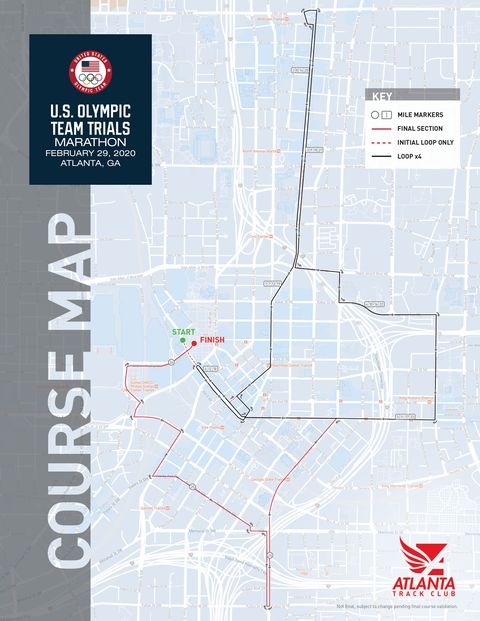
The Feb. 29 event starts and ends midday around Centennial Olympic Park, with mile markers for the 26.2-mile course set along Peachtree Street from Forsyth Street in downtown to Peachtree Circle near the north end of Midtown.

The route also heads through the Virginia-Highlands neighborhood along Highland Ave. to southbound Jackson Street before turning west onto the Old Fourth Ward's Edgewood Ave.

The journey nears its end when runners, who've completed three loops on the aforementioned course, will bank south from Edgewood onto Piedmont Ave., heading south past the Gold Dome and the Siah Armajani-designed Olympic Bridge and Cauldron (erroneously referred to as the "Olympic Rings and Torch" in event press materials) with a U-turn on Capitol Ave. near Georgia State Stadium.

The final two miles cross west along Mitchell Street, with viaduct views of State Farm Arena's iconic "ATLANTA" grand entrance and Megatron's Butthole, er, Mercedes-Benz Stadium as the thinning pack runs the final stretch back toward Centennial Olympic Park.

Runner's World magazine and event host Atlanta Track Club produced a high-quality and informative video of the route available here:


To showcase Atlanta's Olympic spirit on NBC's live national broadcast, fans are encouraged to #showyourgold on race day, with several places to watch designated on the event's official website.

In Midtown, for instance, Hudson Grille, Publik Ale House and City Tap House (each along Peachtree Street) will offer $2.62 beer, tacos or other marathon-inspired specials. With numerous road closures, MARTA is recommended.

Though I cheered runners at Peachtree Road Races many times since 1996, this will be my first Olympic marathon experience and the city's second, which I missed thanks to work shifts at the Atlanta Olympic Village.

Female runners to watch for include two-time Olympic marathoner Desiree Linden, who did not finish in London 2012 but placed seventh at Rio 2016. According to the event site, her all-time fastest marathon (2:22:38) and Trials qualifying time at the 2019 New York City Marathon (2:26:46) put her a few minutes from the top Trials qualifier Jordan Hasay, who set her personal best time at the recent Chicago Marathon (2:20:57).

A hometown runner on which to keep an eye is Georgia native Bridget Lyons Belyeu, who trains on the Silver Comet Trail and near her south Atlanta residence in Newnan, Ga., according to a recent profile in Atlanta Magazine.

In the men's competition, three-time Olympian and Rio 2016 marathon bronze medalist Galen Rupp is the leading 2020 Trials qualifier (with 2:06:07; he is also a three-time Olympic competitor in the 10,000m, earning silver in London 2012). Atlanta marks his fourth Olympic marathon trials, which he won on the Road to Rio.

The entrant with the second-fastest qualifying time (2:07:56) is Leonard Korir, who "ran the fastest-ever marathon debut by an American" in the 2019 Amsterdam Marathon, where he did not have an elite bib but placed 11th. He was a Rio 2016 Olympian and considers Rupp one of his heroes, according to his Team USA bio.

Portland resident Patrick Reaves returns to his hometown Atlanta to compete in his first Olympic trials with a qualifying time of 2:17:45.

As reported in Sports Illustrated on Feb. 13 and in this Yahoo! article on Valentine's Day, the Atlanta event also includes first openly transgender athlete competing in an Olympic marathon trials. Though Megan Youngren's bio is not yet posted on the event website, her qualifying time of 2:43:52 puts her further back in the rankings.

The S.I. article explains how the International Olympic Committee would handle her qualification in Tokyo should Youngren earn a Games berth in Atlanta.

The three top female and male finishers will compete at the 2020 Tokyo Olympic Games on Aug. 8 and Aug. 9, respectively. The 2020 Olympic marathon course is in Sapporo, Japan, host city of the 1972 Winter Olympic Games and some of the Olympic football competitions this summer.

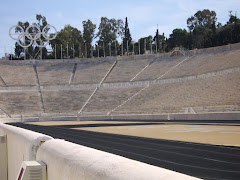
Marathon site at Sapporo Odori Park
For those heading to Japan, it appears the start and finish in Sapporo Odori Park is just a few blocks from the city's main rail station. Check out the course map below and at this link for more details.

Check out more of the competitor roster on the event website -- with the marathon route along Peachtree Street just a few blocks west of my Midtown residence, I may set up a viewing spot at The Vortex Bar & Grill between Seventh Street and Eighth. They serve some delicious sake!

Images via Team USA, Atlanta2020Trials.com, Atlanta Track Club, MyBestRuns.com and the Tokyo 2020 Olympic website.


Thursday, November 7, 2019

Upended Lives at Olympics Provide Drama and Richard Jewell Revelations in "The Suspect"

In the next few weeks, Atlantans and media will be buzzing about the new nonfiction book "The Suspect: An Olympic Bombing, The FBI, The Media, And Richard Jewell, The Man Caught In The Middle" by Kent Alexander and Kevin Salwen.

This page-turning volume, a triumphant feat of journalism, research and writing 23 years in the making, encapsulates thorough, at times revealing, details about Jewell, the hero security guard who moved hundreds of concertgoers out of harm's way before a hidden bomb he found detonated at the Atlanta Olympic Games. If contributors from Jewell's inner circle achieve their goal, folks everywhere will at last proclaim the praises of Atlanta's least celebrated hero.

The book also puts a magnifying glass on the Atlanta Journal-Constitution reporting team, notably Kathy Scruggs, as well as a specific FBI agent, Don Johnson and his colleagues, whose work in their respective fields forever impacted Jewell's and his mother Bobi's lives.

Monday afternoon a review copy finally landed on my Midtown front porch, and I delighted in devouring its 368 pages that are equal parts crime drama and unflinching critique of Federal investigations and investigative journalism.

An enclosed press release affirmed my hunch the book was optioned by Warner Bros. for the upcoming Clint Eastwood film "Richard Jewell" set for a world premiere at AFI Fest in Los Angeles on Nov. 20 (with Dec. 13 as the national release day).

One "reveal" of Alexander and Salwen's work is that the film's screenplay, at least in the movie trailer, is close to verbatim from their research of the FBI's interrogation of Jewell.

Juxtaposed with this fact, the book also reveals that Eastwood's screenwriter Billy Ray took at least one major liberty in the script: Jewell's attorneys aptly never allowed the hero guard to record the bomber's 9-1-1 call script, "There's a bomb in Centennial Park ... you have thirty minutes!" (I've previously taken Eastwood and his screenwriter for "American Sniper" to task for playing fast an loose with Olympic facts, the all-time most-read posts of this website).

"The Suspect" is a great read with relevance for anyone passionate about or in law enforcement, news media, Olympic organization, historians (of Atlanta, the USA, true crime or the Games) and the millions of people who experienced or have interest in the Centennial Olympics of 1996.

Make that a must read.

All of the one-time Atlanta Committee for the Olympic Games (ACOG) staff and volunteers will appreciate and remember scores of long-forgotten Games-time intricacies.

Between the book's end pages -- noticeably featuring a hand-drawn bomb site map by Jewell and a Miranda rights form he reluctantly signed during his sideways interrogation (cue the "Richard Jewell" film trailer with John Hamm's stern voiceover) -- readers may be mesmerized about "The Suspect" by the numbers.

Following their 1996 roles that introduced them to their subjects, Alexander and Salwen spent more than five recent years pouring over "tens of thousands" of legal documents, 170,000 ACOG archive pages and reports, thousands of photos, dozens of cases of personal effects, 1,200+ news articles and hundreds of video clips.

They also conducted "187 original-source interviews" and read dozens of books or other materials, initially logging 2,139 footnote entries later converted to narrative source notes on their ABRAMS Books editor's suggestion. The years-long FBI investigation of Jewell and other dead-end leads exponentially adds to the mind-bending facets of the research.

The book project unfolded at a venue the authors dubbed "the cottage," which I envision resembled a "war room" like those seen on any crime drama investigation.

Notable details uncovered and documented include:
  • How Jewell's parents named him after auto racing legend Richard Petty, while nicknames the FBI adopted for too-blurry images of the actual bomber included "Blob Man" and "Goatee Man" (only one of them proved to be the man, Eric Rudolph). Beer-chugging witnesses earned the sobriquet "Speedo Boys"
  • Richard Jewell's secret lasagna recipe he cooked and served to a law enforcement peer from Centennial Olympic Park, only to later learn his invited dinner guest was wearing a wire for federal investigators
  • Which national TV reporters initially proclaimed Jewell a hero then later apologized in months-later follow-up interviews intended to rightfully exonerate him in the public eye (I had no idea Jay Leno apologized after his initial monologue quips comparing the guard to Nancy Kerrigan's attacker)
  • The Atlanta Magazine reporter who agreed to a date with Richard, only to later embarrass a crestfallen Jewell with an unflattering cover story
  • Which local radio station paid a $50,000 settlement after using Jewell's likeness in an unsanctioned outdoor billboard campaign around the song "Freebird"
  • Summaries of the Atlanta Journal-Constitution Games-time "Peach Buzz" columns including the time Donald Trump lost his wallet at The Cheesecake Factory in Buckhead, and AJC non-Olympic reporters including Scruggs, who proudly reported on "distinctively non-sports coverage areas of Security, Neighborhoods and Olympic Transportation" in their "SNOT Pod" newsroom space
  • The downward spiral Scruggs endured years after her Games reporting, including shocking outdoor incidents involving a taxi she commandeered in the buff. 
Several Olympians provided interviews for the authors, including Michael Johnson, who recalled a hospital visit to injured bomb survivors before competing in second gold medal sprint.

Gold medalist Janet Evans, who witnessed the bomb explosion during an in-park TV interview, also garnered frequent mentions in the text (though it is not clear yet that she was interviewed for this book).

Personal revelations for this reader included notes on how Jewell attended the same Olympic baseball game (Cuba vs. Nicaragua) for which I held a ticket and cheered with friends. A day later, some of the federal agents of "The Suspect" watched over the India vs. Pakistan Olympic field hockey game at which I helped Pakistan fans hold aloft a giant green and white flag (my Minnesota State University-Mankato junior-year roommate spotted me on TV while watching at home with his family ... in Lahore).

I learned the most from the chapters about Rudolph -- his capture, prosecution and revelations about his post-Games movements were not on my radar in the early 2000s, though Rudolph's two other despicable attacks in Atlanta were. The book brought to mind vivid memories from news coverage of both events. The bomb he detonated in Birmingham was not "new" to me, but the authors' framing of the scene inspired chills.

Much of the Jewell narrative (until the final chapters) felt more like a fleshed-out version of previously seen reports, like a Titanic-sized version of Marie Brenner's extensive Vanity Fair article after she shadowed Jewell's legal team for months.

But I appreciated the details that at once revealed Jewell's relatable, jovial, every man nature while cracking me up, like this description from page one:
Hopping off the [MARTA] train, Jewell descended International Boulevard, the lime-green lanyard that held his credential swinging across his ample belly.
Been there, done that!

A much bigger revelation: the AJC assigned interns to interview Jewell or help report updates from his residence after Scruggs and colleagues broke their scoop under the screaming headline "FBI suspects 'hero' guard may have planted bomb."

I can't imagine receiving a federal subpoena to testify about either of my internships.

Readers also learn the less-reported aspects of the guard's later-career heroics, including touching stories of a CPR rescue and how he reflected on each anniversary of the night that changed his life. The love of his life provided some of the best heartfelt details, underscoring her own (and other Jewell inner circle members') "... hope that one day Richard Jewell would be remembered by all as a hero."

Writing of the book's biggest revelation -- which took my breath away -- would be an unforgivable spoiler (though I predict other book reviewers will not hold back).

It's fun to learn new vocabulary while reading, and the words bonhomie, putative, and lithe joined my lexicon thanks to Alexander and Salwen. And I was surprised that a book touted as a "gripping story of ... the advent of the 24/7 news cycle" did not include more mid-'90s context from the trials and tribulations of Tonya Harding and O.J. Simpson (especially the former's five-ringed connections).

Meanwhile, I found just two glaring errors and one minor one in "The Suspect."

First, the authors referred to the "seven-building Olympic Village complex" President Bill Clinton and the First Family visited. Come again?

In the "Blue Zone" of Georgia Tech's west campus -- where I was an ACOG-employed Village housing manager adjacent to the Olympic Aquatic Center -- we had more than 20 buildings including the dorms built to eventually house Team USA and delegations from Russia, Egypt, Indonesia, Germany, the U.K. and dozens of other national Olympic Committees including the heavily-fortified Israeli team quarters.

My sister worked in the distant "Red Zone" north of 10th Street, which had several buildings visited by Spain's Royal Family. And over in the "Green Zone" was my Games-time housing in a frat house (one of about 20 used by NOCs).

I don't recall what the brand new towers along the Downtown Connector were named ("Blue Zone?") but it was fun attending the opening press conference with ACOG in spring 1996.

Maybe the authors only considered the "International Zone" around Georgia Tech's Ferst Center for the Arts to be the "Village complex" they described. As Hillary Clinton has proven many times, forgiveness is key, and perhaps it takes a village to get these Georgia Tech and former Georgia State University towers counted. I forgave the miscount.

An even less intrusive-to-my-eyes flub was the writers' mention of a James Brown concert at a bar named "Tabernacle."

No doubt, they meant the festive church-turned-concert hall that's still rockin' and rollin' next to the Atlanta Ferris wheel installed years later.

I'm less forgiving and not forgetting the page on which the authors recounted memories of the host committee's COO, who famously slept in his office at The INFORUM, the ACOG headquarters building which overlooks Centennial Olympic Park, some nights of the Games.

According to Alexander's and Salwen's interviews, when the bomb exploded just after the A.D. Frazier conked out in his office,
He leapt from bed ... [and] ran to his balcony barefoot and stared at the chaos and emergency lights below. Bodies were strewn across the bricks of the park. His mind flashed to the movie Saving Private Ryan, with its vivid, brutal scenes of battle. Rattled, Frazier spun and hurried back inside his darkened office, switched on the desk lamp and dialed Payne. 'Billy, we've got a problem.
I know Frazier to be wicked smart, but not clairvoyant nor one who could predict future film scripts -- the problem with this recollection, as documented in "The Suspect," is that Steven Spielberg's epic war picture did not debut until 1998.

Sidebar: I also know A.D. did not sleep on the couch by his office 24 hours after the bomb, because I tearfully fell asleep on that sofa during my own visit to overlook the park in the early hours of July 28, 1996. The sodas in his mini-fridge provided comfort as well.

Atlantans have the opportunity to meet "The Suspect" authors at the Atlanta History Center on Nov. 12 at 7:30 p.m.

They'll be joined on stage by former AJC Senior Managing Editor Bert Roughton, a book source who wrote this Sunday AJC opinion piece about his colleague Scruggs, as well as event moderator John Pruitt, formerly of WSB-TV. Tickets are $5 for members and $10 for non-members. For more information visit this link.

On the invitation of the ABRAMS Books publicist, I delivered questions tailored for each author and will follow-up this post with their Q&A responses. What questions do you have for this remarkable writing duo? Please post them in comments and I will try to ask at the AHC event.

Book and author images via ABRAMS. Book cover photo via Bobi Jewell with jacket design by Devin Grosz. Author photo by Allison Shirreffs. Other photos via Associated Press, DP/AFP/Getty, ESPN and GeorgiaEncyclopedia.org. 

Sunday, October 6, 2019

Richard Jewell Trailer From Eastwood Looks Good

The trailer to the upcoming film "Richard Jewell" hit the Internet last week, and in just a few days the two-minute clip from Warner Bros. racked up a half-million views via official channels and movie fan sites. Check out the tension-building intro here:


This first glimpse at Clint Eastwood's 38th directing gig is void of many surprises, but it does reveal a few details not yet widely reported for the film.

First, it appears the score to "Richard Jewell" may be composed by Arturo Sandoval, the jazz musician who provided original works for Eastwood's most recent feature "The Mule." Sounds good.

Second, the narrative -- at least as presented by "Richard Jewell Official Trailer" No. 1 -- seems to remain in step with its source material, the Marie Brenner article for Vanity Fair magazine. Potential props to screenwriter Billy Ray for resisting a fictionalized drama as seen in other Eastwood "based on a true story" narratives. The explosion filmed at Centennial Olympic Park this summer is convincing!

Third, Kathy Bates, Olivia Wilde, John Hamm and Sam Rockwell each brought their A-game to their roles. I can hardly wait to see how they deliver the goods as Jewell's mother, reporter, investigator and attorney, respectively.

And finally, it seems the actor in the title role, Paul Walter Hauser, is made for the part, more so than Jonah Hill, the Oscar nominee originally slated to don Jewell's security gear (Hill is now a producer). Though convincing in "Moneyball" and other dramatic roles, he's perhaps too good looking for this one!

Audiences will recognize Hauser for two prior roles, including one as heavy on the Olympic relevance, starting with 2017's "I, Tonya," in which he portrayed Tonya Harding's bodyguard Shawn Eckhardt.

More recently he effectively portrayed a witless Colorado Springs hater in Spike Lee's "BlacKkKlansman."

Hauser's close-up mug appears repeatedly in the "Richard Jewell" trailer and he is convincing as the real-life Jewell who appeared on "SNL" and many other TV broadcasts of 1996 to the early 2000s, when he was finally exonerated.

The trailer also gives prominence to an off-screen villain, Eric Rudolph, who on July 27, 1996, uttered the eerie phrase to a 9-1-1 operator from a downtown Atlanta payphone:

"There's a bomb in Centennial Park ... you have thirty minutes!" 

In the video, Hamm as FBI investigator and Hauser as Jewell state this sentence a combined eight times, with an ascending intensity that crescendos to match Rudolph's actual recorded creepiness.

Punctuating the trailer, I like the tag line presented before the film's credit list:
THE WORLD WILL KNOW HIS NAME
AND THE TRUTH
Which brings me to a curiosity of the trailer: portrayal of the Atlanta Journal-Constitution newsroom.

In addition to a fictional news editor with a made-up name plate (verified in an email I exchanged with the real AJC Olympic editor of the day), there's a made-up version of the iconic "It's Atlanta!" front page dated September 18, 1990.

Why the Eastwood prop team included a 2019 photo of Midtown Atlanta in their mocked-up news page baffles me. The other headlines on the dummy newspaper also have no resemblance to the actual page announcing when Atlanta won its Olympic bid.

These are minor details. Big picture, one hopes the film otherwise sticks to the facts when it hits theatres on December 13.

Photos via this Collider.com report, which credits the images to Claire Folger/Warner Bros., except for the image of the clip board, which appeared on CineReflex without photo credit (possibly a still grabbed from the trailer). The image of Olivia Wilde with framed newspaper is a screen grab from the "Richard Jewell" Official Trailer on YouTube via Warner Bros. 

Sunday, August 18, 2019

Clint Eastwood Crew Films Family Jewell In Atlanta

Olympic park/Eastwood mash up image via JoBlo.com


For film buffs and Atlanta residents, summer headlines about Warner Bros. casting a new feature based on Richard Jewell may be old news.

For those further afield, the following roundup includes updates and photos from the set of the upcoming movie centered on the hero of the July 1996 Olympic Park bombing.

Hopefully a detail or two may also serve as informative updates for local readers.

I enjoy Clint Eastwood, a longtime favorite of this writer, equally for his behind-the-camera work and for original characters he created as an actor.

His film career spanning seven decades seldom includes five-ringed themes, but that's quickly changing with Eastwood directing a new picture based on the 1997 Vanity Fair article by Marie Brenner titled "American Nightmare: The Ballad of Richard Jewell," about which I first posted details in 2015.

At that time, Jonah Hill and Leonardo DiCaprio were set to star as the 1996 Olympic park security guard hero-turned-bombing suspect and one of his attorneys, respectively.

Consider me anxious -- for nearly four years and counting -- to experience this film.

For context: Getty Images photo of bomb investigation site taken July 27, 1996


Thanks to an online post by a fellow writer, earlier this month while my girlfriend visited from Russia, we enjoyed an extended peek at one of the Atlanta sets created for the film. For almost a week, Centennial Olympic Park's north end served as a closed set for Eastwood's team.

We snapped two night photos and several daytime images, sprinkled about this post (though not one is worth a thousand words in this case).

The image at right, for instance, offers a little taste of the set designers' take on Atlanta's "look of the Games" complete with an original Olympic torch logo created for the film.

More on what we learned around the site, where one overnight sequence involved detonating noisy pyrotechnics, follows later in this post, but first a bit more recent background.

During spring 2019, online sources said Eastwood reconfirmed involvement with the project in May, a cast was locked in within weeks, and shooting began in July. As of two weeks ago filming remained underway at multiple locations across Atlanta, with reported sightings of cast and crew both downtown and the city's upscale Buckhead district.

Paul Walter Hauser landed the title role. Some may recall his Olympic-tethered scenes in "I, Tonya" with pivotal action (sans Nancy Kerrigan knee-bashing gear) set inside Decatur's local favorite Asian restaurant, The Golden Buddha.

Paul Walter Hauser in "I, Tonya"
There's definitely a Hauser resemblance to Richard Jewell in other "I, Tonya" scenes as well.

Richard isn't the only Jewell family member who'll appear in Eastwood's project. Misery loves company as Kathy Bates signed on in (what I guess to be) a supporting role as Bobi Jewell, the security guard's mother with whom he resided, and endured throngs of media staked out at their apartment, when their lives were upended.

The film also stars Olivia Wilde as the Atlanta Journal-Constitution reporter whose cover story about the bombing investigation put Jewell in a global spotlight, while Jon Hamm will don, er, drape the shoes and uniform of Tom Shaw, possibly a pseudonym for Georgia Bureau of Investigation officer Tom Davis, who helped Jewell to relocate bystanders before Eric Rudolph's pipe bomb detonated.

Sam Rockwell stars as Richard's criminal attorney Watson Bryant. It remains unclear whether Jewell's libel attorney, who made a name for himself by representing pariah clients, will be portrayed.

Now back to the local sets for the film.

In Centennial Olympic Park, Eastwood's crew built a replica of the AT&T stage, sound/lighting tower and concert area that operated in the summer of 1996. As a one-time Atlanta Committee for the Olympic Games employee who watched the stage's original construction from the lunch room balcony of The INFORUM (ACOG's headquarters), no matter the angle the modern rebuild looked authentic.

From our western-edge vantage to view filming, we noted some of the finer details of the set, such as the mock Atlanta Olympic banners donning many stage elements.


In the rain, when some extras retreated to a staff tent and others stopped along the fence line to visit with non-cast friends, we noted their costumes included Olympic-branded gear with logos that matched the banners (both are of mock logos, not the actual AGOG trademarks and rings).

Nice touches, right down to the security guard pith helmets and baseball caps.

According to the Vanity Fair article, on the evening of July 26, 1996, a band named Jack Mack and the Heart Attack was playing just before the bomb exploded. We neither saw nor heard any music, as the evening of our scouting they were already filming post-explosion emergency response.


We also saw no EMT vehicles in scenes being filmed at night, but the following afternoon we spotted ambulances and police cruisers circa 1996 (or at least dressed to resemble the era) parked on the set as well. The blue pickup truck has a resemblance to Richard Jewell's personal vehicle, and the FBI investigations van (see photo) also looked "real" in broad daylight.

The centerpiece of the set was a recreation of the sound tower including a park bench like the one under which the original Jewell discovered Rudolph's backpack.

The set designers really nailed it (no pun intended) with "the look" of the damaged tower as it appeared during the 1996 investigation and as the park reopened with Ambassador Andrew Young leading the ceremony all those years ago.

A security guard hired for the film set informed us that the mock bombing, which took place in the middle of the night, brought at least one disgruntled hotel guest to the set to express her frustration for getting jarred out of bed without warning.

I am really curious who created the Olympic sport pictograms that decorated the set, and would love to know who was involved with the fictional XXVI Games banners. The color schemes are this close to authentic. Too bad, but the costume designer did not resurrect the brown skorts donned by summer of '96 female volunteers ... well, not "too bad," actually (they were terrible).

Our study of the set gave me hope Eastwood is committed to creating an authentic audience experience.

Reflecting on "The Ballad of Richard Jewell" article and its conversion for the screen, taken on by Billy Ray of "The Hunger Games" and "Flightplan" fame, I admit to biting my nails about the screenwriter taking liberties with Olympic facts as did the scribe for an earlier Eastwood film.

In 2014, Eastwood and Jason Hall -- screenwriter for "American Sniper" -- played fast and loose with five-ringed details, inspiring the most-read post on this blog (and the second-most read) in which the facts about an "Olympic sniper from Syria" are verified by the Arab state's national Olympic committee (there was no such character in real life).

For the Jewell feature, it's been reported the 2019 AT&T stage set included an actor portraying Kenny Rogers, the Georgia-based singer who did perform in the park in 1996 but, according to the Vanity Fair article, appeared in concert earlier in the week (not the bombing eve).

One wonders: when the final cut hits theatres, will Rogers show up in place of Jack Mack and the Heart Attack during the climactic bombing scene Eastwood & Co. recreated?

I am eager to see how and whether other International Olympic Committee, ACOG or USOPC (then USOC) players may show up in Eastwood's picture. For instance, an archived joint press conference hosted by the IOC, ACOG and FBI includes officials who are potentially quotable in Ray's screenplay, but only the FBI official is listed in IMDB.

Olympian Janet Evans appeared in explosion footage during a live interview that took place on the fateful night -- no listing for her portrayal in Eastwood's film, however.

And though the recreated AT&T stage includes several NBC affiliate studio spaces branded on the set, there are no IMDB-listed credits for cast members portraying NBC, CNN nor other national network reporters who covered the bombing and investigation.

As of this post, the only exception found in IMBD is a cast listing for an actor portraying Bryant Gumbel, who interviewed Jewell in the latter months of 1996, according to Vanity Fair.

It's my understanding "The Ballad of Richard Jewell" filming remains underway in Atlanta. I'll be on the lookout for signs with the production code "KIKI" and post updates as additional details emerge (please share via comments if you have them -- would love to hear from the extras selected for the film).

Photos by Nicholas Wolaver and Valentian Kucheriavenko except the movie still of Hauser from "I, Tonya" via Neon; top image of Eastwood via this site; Getty Images photo of bombing investigation at sunrise 7/27/1996 via this CNN archive link


Wednesday, July 20, 2016

Remembering July 19, 1996

As the sun set on July 19, 2016, many an Atlanta Olympic veteran likely spent time reminiscing.

On this evening 20 years ago, the Centennial Olympic Games opened with great music, Georgia luminaries, star athletes and even a parade of pickup trucks!

The anniversary may be bittersweet for some, considering the night's greatest surprise in 1996 -- Muhammad Ali, who greeted Janet Evans and the world with torch in hand -- died earlier this year, a month or so shy of again celebrating his favorite Games experience (Ali wrote in his autobiography how he could not sleep after lighting the cauldron).

During the last week or so, Atlanta media pulled out the stops for 20th anniversary coverage. 

Local NPR affiliate WABE-FM created a series reliving the 1996 Cultural Olympiad -- great reporting in collaboration with ArtsATL.com

The station also aired a one-hour special and even wrote up Nike's new for 2016 Atlanta '96-inspired sneakers 

It was fun to read about the Atlanta History Center's plans to update the Centennial Olympic exhibition, which will close in a few weeks and reopen next year -- visitors can enjoy one of the 1996 opening ceremony costumes (a giant fish puppet) now on view in the entrance lobby.

The Atlanta Journal-Constitution also created many column inches about Atlanta's Games, including a story about three couples who met and married while working at the Olympics (unmentioned with one couple's memories was my cameo role as neighbor encouraging a job application that led to their introduction).

The city and Centennial Olympic Park also pulled out many stops to host a 20th anniversary "Relive the Dream" celebration hosted by Billy Payne, Andrew Young and a cast of medal-winning athletes.

It was fun to spend Saturday catching up with old friends while meeting new contacts. 

Unfortunately, the "dream" evening on July 16 was not all fun and Games due to two lightning delays. Though they eventually got the party started and the content was fun, a handful of attendees took the organizers to task on Facebook with a few harsh but apt emoticons and comments. 

One of my public relations mentors, his wife, a longtime Olympic historian friend and I spent much of the event playing armchair quarterback to the organizers, ultimately deciding/lamenting the majority of the crowd enjoyed themselves but the event's disarray provided a snapshot of snafus parallel to the issues that played out in grand fashion during those 16 days and nights of 1996. 

The anniversary event scene came complete with crass street vendors, tents and credentials for the feted "haves" gazed upon by the excluded masses of "have nots" and other elements that frustrated many of the worker bees from two decades back. 

When I mentioned our observations to a prominent Olympic historian yesterday, he replied with his take that Atlanta was the "first Olympics at which most of the athletes were professionals and the organizers were all amateurs" -- hysterical! 

But, hey -- where would we be without the Atlanta Games experience? I am thankful Payne went to church and scribbled "Olympics" on his working list of community projects in 1988, and that the experiences afforded in 1996 put me on track to attend my 10th Games at Rio starting next week.

I also appreciate the hard work that went into the anniversary event.

This evening the Olympic news outlet Around The Rings hosted a fun party in honor of the Atlanta milestone, and some of my favorite memories of '96 came to mind:

-- Watching the Opening Ceremony live in the kitchen of a Chinese restaurant with my sister, a fellow Olympic Village team member, before we returned to Georgia Tech for the late shift and athletes coming home for the evening

-- Getting acquainted with ACOG Communications Manager Dick Yarbrough and the organization's archivist during work hours (learned the most enriching and "real" Games stories from both of them)

-- Sharing many social gatherings with fellow 1995 USOC interns-turned-Atlantans during the pre-Games spring of '96

-- Following-up the ACOG experience with a bonus two months of Paralympic employment and an additional wave of fun times paired with hard work.

There are many Games-time friends with whom I've lost touch -- would love to reconnect with so many of these people. 

One person in particular is a Village volunteer who attended the University of Georgia. On the last night of the Atlanta Olympic Village, which was Aug. 6, 1996, the two of us visited 4,000 dorm rooms in search of Olympic pins, and I've missed the shared laughter over all the random stuff we discovered the athletes left behind. 

Here's hoping my long-lost friend Emily Sanders is out there and enjoying her Olympic memories as am I.

Photos via Yahoo, Nike, Atlanta History Center. Park photo copyright Nicholas Wolaver.

Tuesday, July 5, 2016

Come Celebrate Atlanta's Olympic 20th Anniversary


On the eve of Rio's Olympic adventure, Atlanta will celebrate the 20th anniversary of its 1996 Games at an evening party in Centennial Olympic Park.

The downtown gathering is free and open to the public on July 16 starting at 6 p.m.

According to a press release from the Georgia World Congress Center Authority (GWCCA), the entity charged with managing the park, the "Relive The Dream" event will be "star-studded" and feature food trucks, live entertainment and fireworks.

"The festivities will celebrate the glories of the Games, reuniting the athletic heroes, the organizing team and fans at the greatest lasting [1996 Olympic] legacy -- 21-acre Centennial Olympic Park," according to the release.

The event is also an "Olympic volunteer reunion," and according to Atlanta-based members of the pin collecting group Olympin, there will be tables available for trading and sharing favorite pin or Games-time stories. A spokeswoman for GWCCA said their "might" be a "Relive The Dream" pin created for the event.

Anticipated star athletes for the party include 10-time Olympic medalist and Sports Illustrated "Olympian of the Century" track and field legend Carl Lewis, Olympic swimming gold medalists Janet Evans and Amy Van Dyken, Olympic basketball gold medalist Teresa Edwards, and a reunion of the gold-medal winning "Magnificent Seven" U.S. women's gymnastics team including Kerri Strug, Shannon Miller, Amy Chow, Dominique Dawes, Jaycie Phelps, Amanda Borden and Dominique Moceanu. 

Earlier on July 16, Evans -- a vice chair and director of athlete relations for the Los Angeles 2024 bid committee -- will host a private "Town Hall" meeting at which many more Atlanta-based Olympians are expected. In a conversation following the Muhammad Ali Memorial Service in Louisville last month, Evans told me the town hall format was a hit with participants in Miami and Chicago during spring 2016. Since the Ali event in June, a third town hall took place during the USA Swimming Olympic Trials in Omaha last week.

Dignitaries scheduled to appear at Centennial Olympic Park include Georgia Lt. Gov. Casey Cagle, Atlanta Mayor Kasim Reed and Ambassador Andrew Young, who with Billy Payne led the Atlanta Olympic bid and Atlanta Committee for the Olympic Games (ACOG). 

Payne first announced the July 16 party at last September's private "Dreamers & Believers" gathering of Atlanta Olympic bid team members. 

Scheduled entertainment includes country music artist Colby Dee, the folk and Americana duo Banks & Shane, and the gospel-influenced SEEiT Choir.

Since the 1996 Games, Centennial Olympic Park attracted $2.2 billion of new downtown development, including nine hotels, residential towers and attractions including the Georgia Aquarium, World of Coca-Cola and Center for Civil and Human Rights.

The park recently launched a new "adopt-a-brick" program inspired by the 1996 brick campaign that created the footprints and park space enjoyed by tens of millions of visitors during the last 20 years.

See you July 16!

Logo and park image via GWCCA; Payne photo by Nicholas Wolaver

Friday, September 18, 2015

Dreamers & Believers Celebrate 25 Years Since Atlanta's Olympic Wishes Came True

Twenty-five years ago -- Sept. 18, 1990 -- Atlanta won its Olympic bid to host the 1996 Games.

Tonight the bid's originator, William Porter "Billy" Payne, hosted a classy anniversary event to say thank you and celebrate the "Dreamers & Believers" who shared his five-ringed vision as early as 1987.

In a tent filled with about 400 friends at Centennial Olympic Park, Payne proudly explained his remarks for the evening were "25 years in the making" before rolling a video unveiling two new monuments coming soon to the urban park he created.

The additions include custom marble benches honoring key Atlanta business leaders (Jim Kennedy, Bill Dahlberg, Bob Holder, Bennett Brown, Herman Russell and Ivan Allen III) first to embrace the Olympic bid. A new marble column featuring the names of the "Atlanta Nine" volunteers who led the bid committee will also join the statue of Payne installed in 1997. 

Though more details remain to be announced, Payne briefly mentioned a capital campaign in the works to provide other park improvements in time for next year's 20th Anniversary of Atlanta's Games, which will take place on the eve of the Rio 2016 Olympics. 
Introduced by Payne as the keynote speaker of the evening, bid partner Ambassador Andrew Young put into perspective several Atlanta milestones of the 25 years since the city's Olympic victory.

Young referenced the city's rapid growth (more than 25 percent, according to a state representative who spoke earlier in the evening), successful collaborations (to build the world's busiest airport, create MARTA, and to pursue then host the Games) and details of his initial conversations with Payne when Young was Atlanta's mayor. Young said Montreal's $750 million debt from the 1976 Games made his staff members reluctant for Young to meet with the 34-year-old Payne. 

"[But] I heard Billy got this [Olympic bid] idea after church," said Young. "I'm a preacher and I know now the Lord works on you, and when an aging jock in midlife crisis gets religion ... that's the way the Spirit works." He took the meeting and the rest, as they say, is history. 

Other party presenters included WSB's Monica Kaufman, who was in Tokyo covering the 1990 vote, and Charlie Battle, the Atlanta attorney credited with visiting more nations during the bid and for helping forge the most friendships with voting IOC members. Other VIP attendees included former Atlanta Committee for the Olympic Games CFO A.D. Frasier, Cohn & Wolfe co-founder Bob Cohn, a longtime Olympic collector whose firm provided early public relations counsel for the Atlanta bid team's domestic campaign, and University of Georgia football coaching legend Vince Dooley, for whom Payne played years before his Olympic feats and current role as chairman of Augusta National Golf Club.

During his remarks detailing the bid committee milestones of 1988 to 1990, Battle called out several volunteers including Atlanta Marriott Marquis concierge Albert "Smitty" Smith who charmed many IOC leaders and staff.

"[Smitty] is one of the first people IOC friends ask about when I travel and see them," said Battle.

Battle also mentioned the bid team's early events that wooed the U.S. Olympic Committee away from competing bids from San Francisco, Minneapolis and Nashville. He detailed the scrappy manner through which Atlanta created an "Atlanta House" in Seoul during the 1988 Olympics and around the 1989 IOC Session held in Puerto Rico. 

Forging friendships across the Olympic Family echoed as key to the win, according to remarks from Battle, Payne and Young. Since the rules of Olympic bidding now forbid voting IOC member visits to candidate cities, its likely Atlanta's networking techniques were a first- and last-time option for Olympic bid committees of the 2010s and beyond.

Young said Atlanta proved to have a lot more Olympic connections than anticipated, including then-USOC Treasurer Dr. Leroy Walker as a local high school graduate, and Edwin Moses as a top Olympian of 1976 and 1984. 

Young attributed divine intervention, through his U.S. Ambassador assignments from President Jimmy Carter, as federal duties that helped him renew existing connections to up to 55 voting IOC members on behalf of Atlanta. In Young's mind, things started adding up that "The city was ready for it" and "we did it."

During a media Q&A prior to the event, I asked Young if he could recall waking up in Tokyo on Sept. 19 after reality over the victory may have set in for the team.

"The first thought I had was, 'Damn! We won this thing and we're broke,'" said Young. "They [the IOC] gave us a letter saying that we won, but it was also a bill for $1.5 million for the victory party. I said, 'Thanks, you gave us the Olympics and a bill to start with?" 

Like tonight's gathering, that was one party worth every penny.

Photos by Nicholas Wolaver


Blog Archive

Powered By Blogger
Web Analytics